
The Truth Behind the Trend: Why the Ponytail Facelift Falls S...
Read On

Hobgood Facial Plastic Surgery: Todd Hobgood, MD
8415 North Pima Road #120
Scottsdale, AZ 85258
Phone: (480) 214-9955
Hours:
Monday-Friday: 8 a.m.–4 p.m.
While deep plane facelifts often provide the most comprehensive and longest-lasting results, not every patient requires the same level of correction. Dr. Todd Hobgood is a double board-certified facial plastic surgeon who carefully evaluates each patient’s facial anatomy, degree of aging, and goals to determine the most appropriate approach.
For select patients with early to moderate signs of facial aging, a SMAS facelift can offer noticeable improvement in jawline definition and lower facial contour while maintaining a natural appearance. When chosen intentionally, this technique can be an effective part of a personalized facial rejuvenation plan for our facelift patients from Scottsdale, Arizona, and beyond.
With over 20 years of experience performing the full spectrum of facelift techniques, Dr. Hobgood bases his recommendations on what will deliver the safest, most natural-looking, and longest-lasting result for each patient. During a personal consultation, he takes the time to determine the best approach and ensure patients feel informed and confident in their decisions.
SMAS refers to the superficial muscular aponeurotic system, an organized fibrous network composed of the platysma muscle, parotid fascia, and fibromuscular layer covering the cheek. A SMAS facelift targets this layer to create youthful, natural-looking rejuvenation.
A SMAS plication facelift is often called a mini facelift because it’s less invasive than a traditional SMAS lift. In this short-scar procedure, the surgeon generally will not undermine or dissect the SMAS tissue; instead, the surgeon uses support sutures in the surface to create the result.
In a traditional SMAS imbrication facelift, the surgeon undermines and separates the SMAS layer, producing a girdling effect that tightens the jowls, jawline, and neck. Neither SMAS plication nor imbrication involves releasing the deep facial ligaments. These ligaments hold the SMAS in place and, unless released, would limit the elevation of the facial tissue.
Under certain patient circumstances, including past surgical history and some anatomic conditions, expert surgeons like Dr. Hobgood may recommend a traditional SMAS imbrication or limited (mini) SMAS plication approach.
Having performed more than 1,700 facelifts over his 20+ years in practice, Dr. Todd Hobgood recommends a deep plane approach for most patients because it reliably produces superior, long-term results. This technique incorporates a more extensive release of facial ligaments, allowing for more natural release and repositioning of the cheeks, jowls, and neck soft tissues. In many circumstances, the deep plane approach for facelifting incorporates a more natural, refreshed look with less downtime. It also allows for the artistic repositioning of the volume of the SMAS platform into a more youthful position, filling the cheeks and jawline.
Many people combine their deep plane facelifts with a neck lift or deep plane neck lift for comprehensive rejuvenation of the lower face and neck. Dr. Hobgood’s online photo gallery has more than 125 facelift patient cases that cover a variety of combinations and have contributed to his 380+ 5-star reviews on Google.
See the comparison of traditional and deep plane techniques.
Dr. Hobgood combines his down-to-earth, personable demeanor with an artistic eye and technical expertise honed through thousands of surgeries, including more than 1,700 facelifts and over 5,000 rhinoplasties. He's recognized nationally for his leadership and has been honored by the American Academy of Facial Plastic and Reconstructive Surgery for his ongoing commitment to quality.
Meet Dr. Hobgood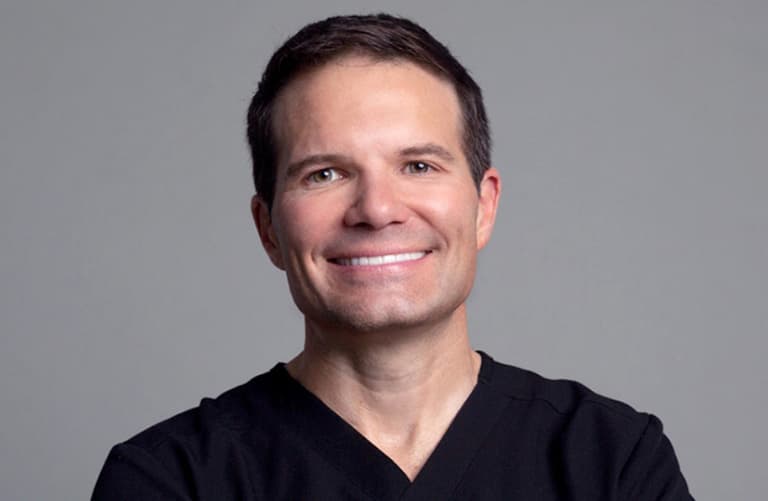
What makes Dr. Todd Hobgood one of the foremost facelift specialists in the nation?
Facelifts Performed
Before & After Transformations for View
Year of Facelift Experience
Prestigious Board Certifications

Dr. Hobgood tailors each procedure to the needs of each patient, including the SMAS facelift. A SMAS facelift is sometimes called a short-scar facelift because the incisions are typically less extensive than with a more invasive facelift. Dr. Hobgood makes discreet incisions in front of the ear and lifts the skin, exposing the SMAS layer. He then elevates the tissue and removes excess skin before suturing the incisions.
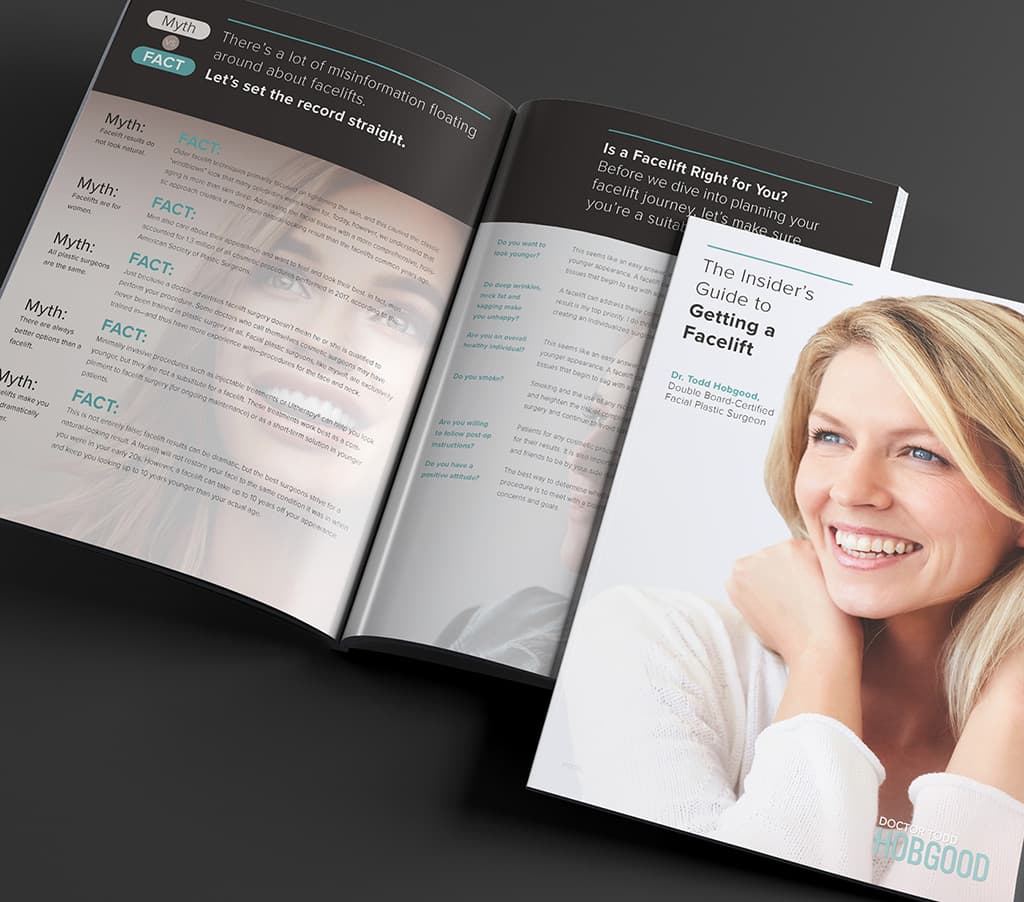
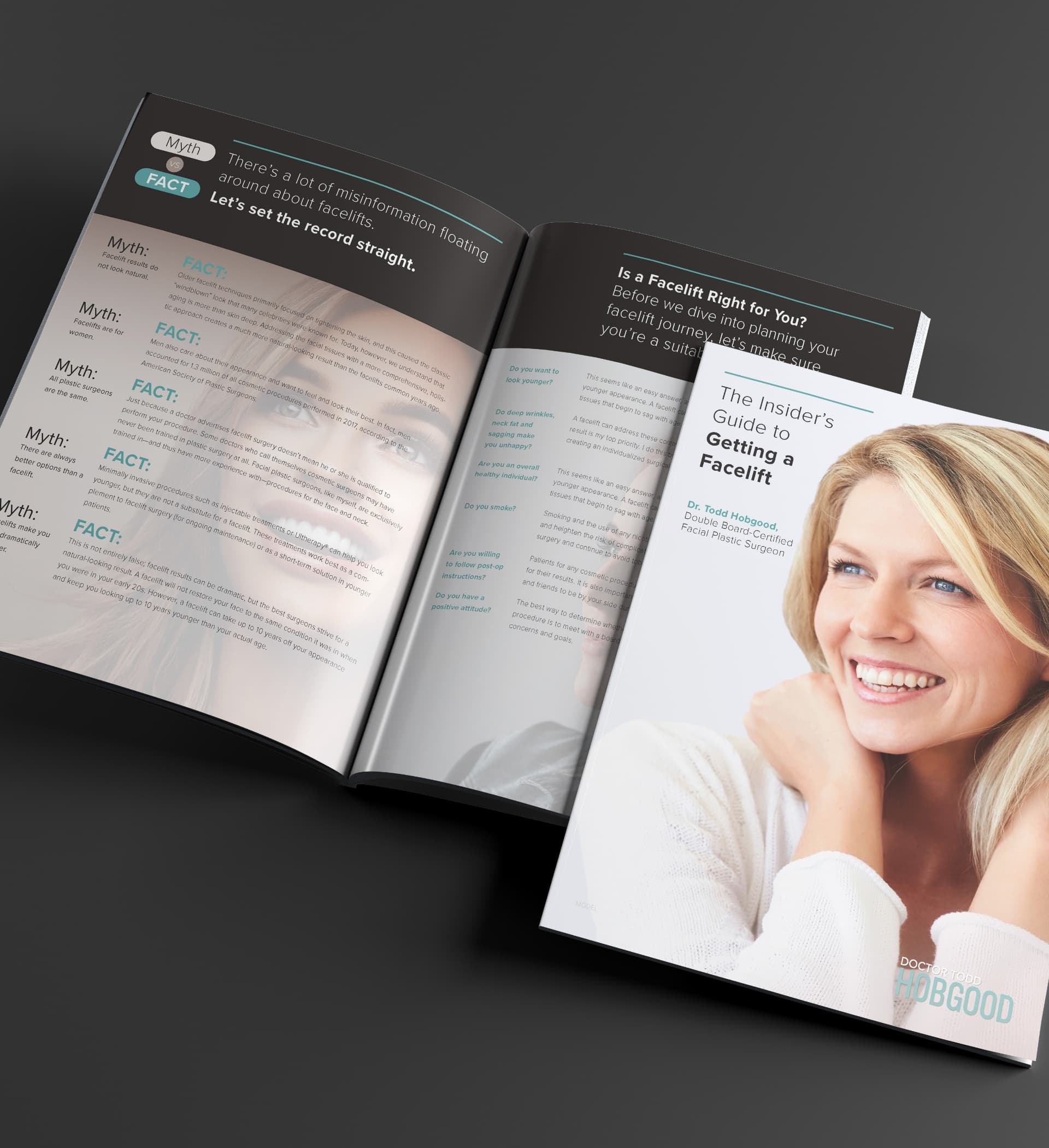
"The Insider's Guide to Getting a Facelift" is the definitive e-book that distinguishes facts from myths and describes the journey of a facelift patient with engaging content and easy-to-understand illustrations.
Double board-certified facial plastic surgeon Dr. Todd Hobgood is one of the leading facelift experts in the U.S., and he's drawn on years of experience to create this Insider's Guide.
Dr. Hobgood's Insider's Guide describes:
Submit the form below to receive our free eGuide as part of a short series of emails on Facelift.
The recovery time following a SMAS facelift is typically shorter than its deep plane counterpart. You should plan to take a week off from work. During this time, the swelling and bruising peak and then start to resolve. While you may experience some discomfort, any pain is usually well managed with over-the-counter or prescription pain medications. Your incisions will initially appear reddish before fading over the ensuing months.
If you’re looking for the best facelift surgeon in Scottsdale, request a consultation using our simple online form to meet personally with Dr. Hobgood or call the office at (480) 214-9955 to schedule an appointment.
Request My Consultation