


The Truth Behind the Trend: Why the Ponytail Facelift Falls S...
Read On

Hobgood Facial Plastic Surgery: Todd Hobgood, MD
8415 North Pima Road #120
Scottsdale, AZ 85258
Phone: (480) 214-9955
Hours:
Monday-Friday: 8 a.m.–4 p.m.
Double board-certified facial plastic surgeon Dr. Hobgood specializes in the preservation deep plane facelift, a modern facial plastic surgery technique that delivers superior results while preserving soft tissue. As a facelift expert with over 20 years of experience, Dr. Hobgood has performed more than 2,000 facelift procedures and is widely considered one of the best deep plane facelift surgeons in Scottsdale and beyond. His refined surgical judgment and an innate artistic eye create results that restore youthful balance and harmony while maintaining natural expression and character.
Unlike traditional facelift methods that focus primarily on lifting the skin, the preservation deep plane technique repositions deeper tissues and muscles as a structural unit, producing more natural, longer-lasting outcomes. Before recommending a deep plane facelift to patients from Scottsdale, Arizona, Dr. Hobgood evaluates their concerns, signs of aging, and aesthetic goals, drawing on his depth of experience with complex facial anatomy and his commitment to individualized care.
Deep Plane Facelift At A Glance
Price Range: Varies
Recovery Time: 3 to 6 Weeks
Average Procedure Time: 3 to 4 Hours
Post-op Follow-up: 1 Day, 1 Week, 1 Month
Recovery Location: Outpatient
A preservation deep plane facelift overcomes the limitations of traditional facelift procedures by addressing both the deeper muscle layer and the superficial musculoaponeurotic system (SMAS). It vertically lifts and repositions these underlying structures while preserving the surrounding soft tissues.
People considering facelift surgery may often worry that the results won’t look natural. Those concerns typically stem from seeing the “skin only” lifting techniques used in earlier methods. Aesthetic surgeons now understand that facial aging involves a loss of volume and bone density, along with sagging tissue and muscles beneath the skin. These changes can deepen the nasolabial folds, marionette lines, and jowls, and lead to neck banding and a softening of the definition between the chin and neck.
The deep plane facelift approach releases and undermines the SMAS tissues of the face and the platysma muscles in the neck and jawline, allowing for the complete repositioning of the soft tissues, fat, and muscles of the platform beneath the skin. Dr. Hobgood is thus able to artistically reconstruct the volume of the lower face and neck for a youthful, natural rejuvenation that has become the gold standard in contemporary facelifting.

Preserving tissue during a deep plane facelift may contribute to more natural-looking results and healthier tissue support. By maintaining the face’s natural anatomy, blood supply, and structural support, Dr. Hobgood can reposition tissues as a single, connected unit rather than simply pulling on the skin.
A tissue-preserving deep plane facelift may produce results that are:
This approach is designed to minimize unnecessary surgical trauma while maximizing rejuvenation, which may contribute to a smoother recovery and more predictable outcomes.
Every procedure I perform is carefully planned to achieve balanced, natural-looking results that complement each patient’s individual features.
– Dr. Hobgood


The cost of a deep plane facelift in the Scottsdale area varies depending on several factors, including the extent of surgery needed and if it’s combined with other procedures. Similarly, male facelift cost and the cost of a mini facelift are dependent on individual factors. Learn more about these pricing considerations in our related blog post. During your consultation, we discuss what you can expect to pay based on your unique case.
Dr. Hobgood combines his down-to-earth, personable demeanor with an artistic eye and technical expertise honed through thousands of surgeries, including more than 1,700 facelifts and over 5,000 rhinoplasties. He's recognized nationally for his leadership and has been honored by the American Academy of Facial Plastic and Reconstructive Surgery for his ongoing commitment to quality.
Meet Dr. Hobgood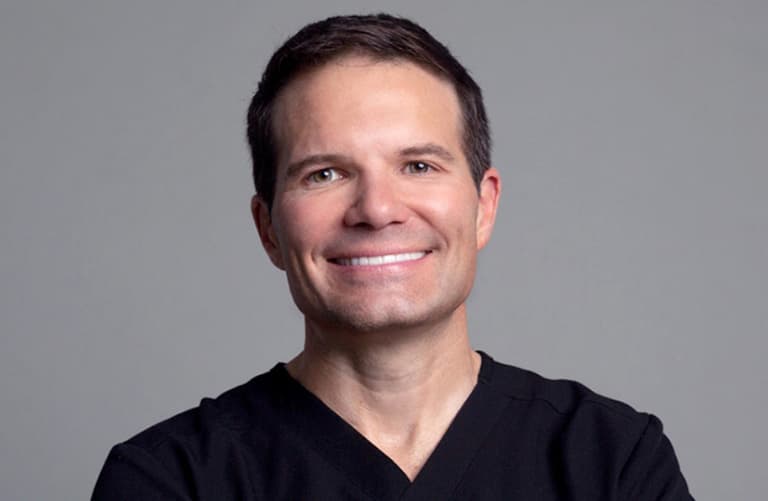
What makes Dr. Todd Hobgood one of the foremost facelift specialists in the nation?
Facelifts Performed
Before & After Transformations for View
Year of Facelift Experience
Prestigious Board Certifications

Dr. Hobgood believes most women and men considering surgical facial rejuvenation can benefit from the deep plane facelift technique. It’s typically recommended for individuals concerned about:
Who is NOT a good candidate for a deep plane facelift? These individuals generally fall into three categories: (1) those with significant health risks, (2) those without enough signs of aging to justify surgery, and (3) those with unrealistic expectations.
During your personalized consultation, Dr. Hobgood will explore your concerns and assess your candidacy for the procedure. Review his more than 125 before-and-after facelift photos and glowing patient reviews, that include more than 380 5-star reviews on Google, for evidence of his expertise.
The main difference between a deep plane facelift and an SMAS facelift, or a mini facelift vs facelift, lies in how the underlying facial tissues are lifted and repositioned. The surgical approach affects how natural the results look, the longevity of the procedure, and overall facial rejuvenation.
| Deep Plane Facelift | Traditional SMAS Facelift | Mini Facelift | |
|---|---|---|---|
| Technique | Full release of foundation soft tissues and muscle ligaments | Release of lateral SMAS tissues | SMASectomy and Plication |
| Mechanism | Natural, vertical lifting of volume over bone structure for restoration | Pulling of SMAS upward to girdle the soft tissues | Excision of strip of SMAS and plication |
| Downtime | 3-4 weeks | 3-4 weeks | 2 weeks |
| Operating Room Time | 3-4 hours | 3-4 hours | 2 hours |
| Incisions | In front and behind ears hidden into hairline | In front and behind ears hidden into hairline | In front of ear and limited behind ear |
| Dissection | Deeper release of the SMAS into the cheek and neck | Less release of SMAS | Subcutaneous to remove a strip of SMAS and plicate |
| Advantages | Natural, youthful redraping of soft tissues and skin without a pulled appearance | Slightly lower risk of facial nerve injury, less technically demanding | Shorter downtime, less invasive |
| Goals | Maximal neck improvement, natural facial volume restoration | Maximal neck improvement, girdle effect on the midface for tightening | Remove loose skin at jowl, no neck change |
"A deep plane facelift allows me to reposition the face at a deeper level, restoring your natural contours in a way that looks beautifully refined and naturally balanced."
- Todd C. Hobgood, MD
The main difference between deep plane and SMAS facelifts is the level of tissue repositioning. A deep plane facelift releases and lifts deeper facial structures as a single unit, creating more natural, longer-lasting results. A SMAS facelift primarily tightens and repositions tissue without fully releasing these deeper attachments, which can limit the degree of rejuvenation.
During your consultation, Dr. Hobgood will assess your anatomy and goals to determine which technique will provide the most natural, balanced result for you.

"The Insider's Guide to Getting a Facelift" is the definitive e-book that distinguishes facts from myths and describes the journey of a facelift patient with engaging content and easy-to-understand illustrations.
Double board-certified facial plastic surgeon Dr. Todd Hobgood is one of the leading facelift experts in the U.S., and he's drawn on years of experience to create this Insider's Guide.
Dr. Hobgood's Insider's Guide describes:
Submit the form below to receive our free eGuide as part of a short series of emails on Facelift.

A deep plane facelift is performed by releasing and repositioning deeper facial tissues beneath the SMAS layer, allowing the entire facial structure to be lifted more naturally. As part of Dr. Hobgood’s customized surgical strategy honed over his more than 20 years of experience, he carefully plans incisions to conceal them in front of and behind the ears.
During the surgery, Dr. Hobgood goes below the SMAS, a layer of muscles, fibrous tissue, and fat under the skin, to precisely release ligaments connected to the SMAS. This technique sets the deep plane lift apart from the SMAS facelift or its more limited, short-scar counterpart, the mini facelift. The deep plane facelift’s vertical lift produces a refreshed, natural appearance without a pulled or “windswept” look.
Once all tissues are addressed, Dr. Hobgood closes the incisions with expert care, creating tension-free sutures that ensure lasting results for 10 years or more.
Procedures commonly combined with a deep plane facelift include brow lift surgery, eyelid surgery, and laser skin resurfacing. Dr. Hobgood often recommends a comprehensive treatment plan, called a One Touch Restore Facelift, to create a more youthful overall appearance.
Yes, the neck is typically included with a deep plane facelift. Dr. Hobgood often performs a deep neck lift to address issues such as neck bands, sagging, and a “turkey neck” for comprehensive rejuvenation, depending on the extent of your aging symptoms.

You can expect the recovery to take 3 to 6 weeks, although most patients can return to work and light physical activity after 2 weeks. Recovery after facelift surgery involves several stages, including physical and social downtime. The initial healing phase lasts about a week. The second stage occurs as your initial swelling and bruising resolve, and you feel comfortable going to dinner or other informal social gatherings. This typically occurs 2 to 3 weeks after the surgery. The final stage can take 3 or 4 months, depending on when you feel ready to attend a significant event, such as a wedding.
How soon can you drive after a deep plane facelift?
You can resume driving once you are off prescription medication and feel comfortable turning your head without restriction.
How long does bruising last after a deep plane facelift?
Bruising reaches its peak in the first week and will gradually lighten and fade over the next 1 to 2 weeks.
How painful is a deep plane facelift?
You will be anesthesized and comfortably asleep during your deep plane facelift, but you may experience some discomfort during the first 2 to 3 weeks post-op. However, we help you manage discomfort with prescribed pain medications. Our team is available to assist you if you experience unusual pain after your surgery.
What will the scars look like?
Dr. Hobgood makes deep plane facelift incisions in discreet locations so scars are not noticeable after you heal. Incisions are hidden behind the ear, within the hairline, and sometimes under the chin. During the early recovery phases, scars will appear raised and dark before they flatten and fade.
If you’re looking for a facial plastic surgeon with the training and skill to perform advanced techniques such as a deep plane facelift, request a consultation with Dr. Hobgood using the online form or call our practice at (480) 214-9955.
Request My Consultation
Reviewed for clinical accuracy by Dr. Todd C. Hobgood on July 10th, 2026.