

The Truth Behind the Trend: Why the Ponytail Facelift Falls S...
Read On

Hobgood Facial Plastic Surgery: Todd Hobgood, MD
8415 North Pima Road #120
Scottsdale, AZ 85258
Phone: (480) 214-9955
Hours:
Monday-Friday: 8 a.m.–4 p.m.
Double board-certified facial plastic surgeon Dr. Todd Hobgood is a nationally recognized leader in custom facelift surgery, known for delivering exceptional patient care and achieving dramatic results that still look natural.
As a facelift expert who has completed more than 2,000 facelift procedures, Dr. Hobgood attracts patients to his Scottsdale, Arizona, facial plastic surgery practice from throughout the Southwest, nationwide, and internationally.
Rather than relying on a single technique for every patient, Dr. Hobgood offers a full spectrum of facelift approaches—ranging from traditional SMAS facelifts to advanced deep plane techniques to his signature One Touch Restore Facelift™. He tailors each plan to the individual’s facial anatomy, aging patterns, and aesthetic goals and personally performs each procedure with meticulous attention to detail.
Facelift At A Glance
Price Range: Varies
Recovery Time: 3 to 6 Weeks
Average Procedure Time: 3 to 4 Hours
Post-op Follow-up: 1 Day, 1 Week, 1 Month
Recovery Location: Outpatient
A facelift (rhytidectomy) addresses signs of aging, such as jowls and sagging skin, by lifting underlying tissue and muscle and removing excess skin. Dr. Hobgood specializes in deep plane facelift procedures, which he incorporates into his signature One Touch Restore Facelift, a customized surgery that combines surgical and nonsurgical treatments to produce comprehensive facial rejuvenation.
Having people trust their appearance, their faces, to you as a plastic surgeon is very humbling, and it’s a choice that I sincerely appreciate.
– Dr. Hobgood

Keep in mind that each patient is unique and your results may vary.

Keep in mind that each patient is unique and your results may vary.
Keep in mind that each patient is unique and your results may vary.
Keep in mind that each patient is unique and your results may vary.
Keep in mind that each patient is unique and your results may vary.
Ideal candidates for facelift surgery are in good overall health and do not smoke or use nicotine products. Women and men typically choose this procedure to take years off their appearance by:
It’s important to understand that a traditional facelift doesn’t address signs of aging on the upper face, focusing primarily on the mid-to-lower face and neck. For complete rejuvenation, Dr. Hobgood offers other customized facelift options.
During your initial consultation, he will work with you to create a comprehensive surgical plan.
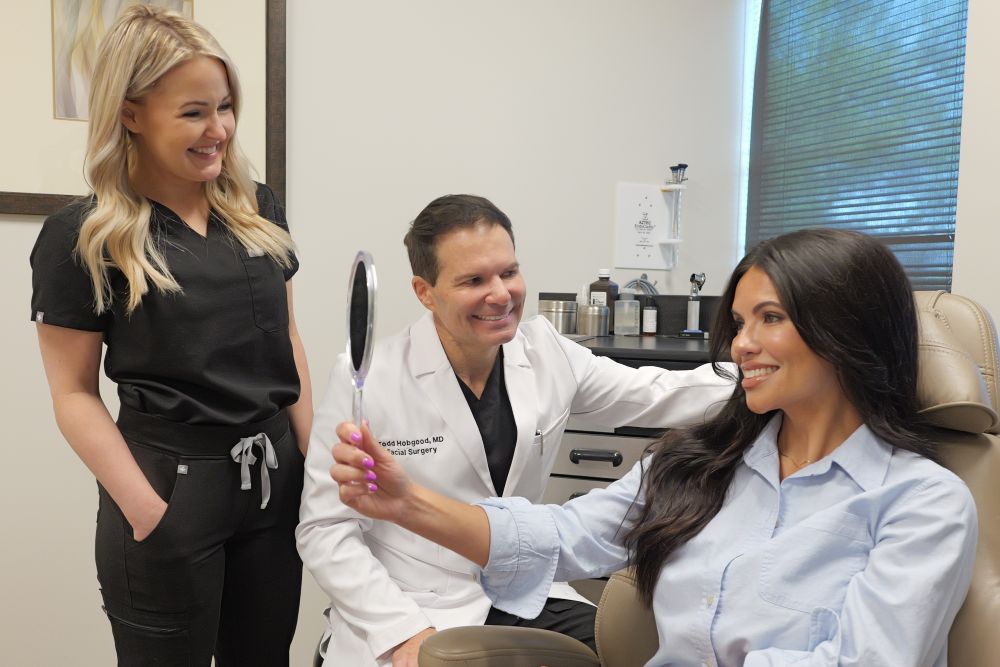
What makes Dr. Todd Hobgood one of the foremost facelift specialists in the nation?
Facelifts Performed
Before & After Transformations for View
Year of Facelift Experience
Prestigious Board Certifications
If you’re experiencing significant medical conditions that impact healing, such as uncontrolled diabetes or blood clotting disorders, it’s best to consider alternatives. Additionally, those who smoke or use nicotine products may not be ideal candidates unless they are willing to quit well in advance of surgery and throughout the recovery process, as nicotine can impede healing and compromise results.
Choosing the right surgeon is the most important decision you’ll make when considering a facelift. Dr. Todd Hobgood has built a national reputation by focusing exclusively on advanced facelift techniques that deliver structurally sound and long-lasting results.
With more than 22 years in private practice and over 2,000 facelifts performed, Dr. Hobgood brings a depth of experience that few surgeons can match. His approach centers on the vertical deep plane extended facelift with preservation techniques, a highly specialized method designed to reposition deeper facial tissues—not just tighten the skin. This allows for more dramatic improvement in jawline definition and midface support while maintaining a natural, unoperated appearance.
Dr. Hobgood is widely regarded as a “surgeon’s surgeon,” frequently treating fellow facial plastic surgeons and receiving referrals from dermatologists, plastic surgeons, and experienced aesthetic providers. Each year, he personally trains more than 20 medical professionals in his advanced techniques, reflecting his leadership in the evolution of deep plane facelift surgery.
Safety and consistency are foundational to his practice. Notably, Dr. Hobgood has never had a case of facial nerve paralysis or skin flap necrosis in facelift surgery. These are 2 of the most serious complications associated with the procedure. This track record reflects both his technical mastery and meticulous, patient-first philosophy.
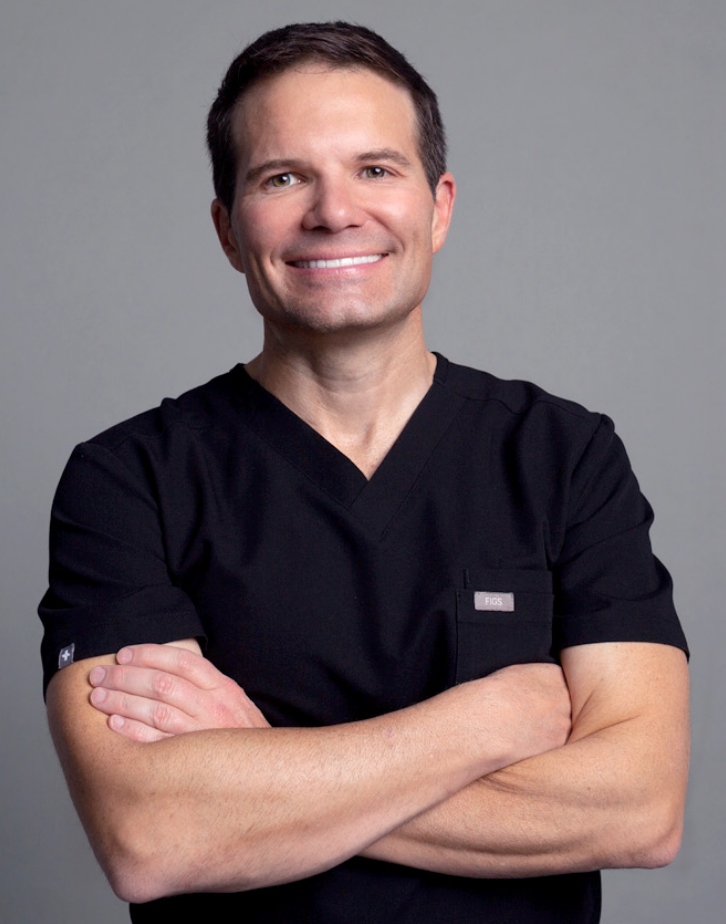
The price of a facelift in Scottsdale varies depending on several factors. These might include, but are not limited to, the surgeon’s experience, the facelift technique used, the condition of facial tissues, and complicating factors particular to the patient in question. During your consultation, we discuss what you can expect to pay based on the specific nature of your surgery.
Visit our blog to learn more about factors that influence the cost of a facelift. If you are curious about the cost of a mini facelift vs. a full facelift, or male facelift cost, we also have blog posts dedicated to deep plane facelift cost and the considerations for cost of mini facelift surgery.


Dr. Hobgood encourages you to keep an open mind when considering your facelift options because the type that works well for a friend may not produce the best result for you. As a facelift specialist, he assesses:
Based on these factors, he may recommend any of the following techniques:
Dr. Hobgood believes the deep plane facelift is the best option for most facelift patients, and he has focused much of his career on perfecting this technique. A deep plane facelift tightens loose skin and restores volume in a way that looks natural and lasts for many years. This avoids the pulled or stretched look and maintains the results indefinitely.
Deep plane facelifts require surgical expertise that not all plastic surgeons possess. This advanced procedure elevates and repositions the facial tissues beneath the SMAS, or superficial muscular aponeurotic system, firms the upper neck, and improves the overall facial contour to a degree that other techniques can’t match.
To learn more about how a deep plane facelift compares to a traditional (SMAS) facelift, please read our related blog post.
A SMAS facelift is slightly less invasive than a deep plane approach and is the most common type of facelift. The SMAS is a fibrous network that includes muscles that change your facial expressions and connects those muscles to the skin’s dermal layer.
As we age, the SMAS becomes less firm, and ligaments attaching it to deeper facial structures loosen. This results in the signs of aging, such as jowls and loose skin.
Dr. Hobgood performs SMAS imbrication facelifts for patients who have had permanent fillers or thread lifts or if undergoing a deep plane lift wouldn’t be safe. Dr. Hobgood may also recommend this approach for certain younger patients with more limited age changes.
Dr. Hobgood reserves the mini facelift for his younger Scottsdale patients with early signs of aging who want to make only small changes. Technically called a SMAS plication lift, this short-scar facelift technique has less extensive incisions than other approaches. It is important to be aware that recovery time for the mini facelift is usually comparable to a full facelift.
The best candidates for Dr. Hobgood’s limited (mini) SMAS imbrication facelift are patients who specifically show premature jowling along the jawline but otherwise have a tight neck beneath the chin.
Dr. Hobgood’s signature One Touch Restore Facelift is a highly customized approach that addresses multiple signs of aging in a single procedure. Rather than focusing on one area, it combines a facelift with complementary treatments, such as a standard or deep neck lift, eyelid surgery, or a brow lift. The goal is to restore overall facial balance and achieve more comprehensive, natural-looking results.
By tailoring each plan to your unique facial anatomy, Dr. Hobgood is able to address changes in skin, muscle, and volume simultaneously. This approach creates a more harmonious, refreshed appearance while allowing patients to undergo a single surgery and recovery period rather than multiple separate procedures.
For easy reference, below is a side-by-side comparison of facelift options, including deep plane facelift vs. a “regular” facelift (SMAS) vs. a mini facelift vs. a One Touch Restore Facelift:
| Deep Plane Facelift | Traditional SMAS Facelift | Mini Facelift | One Touch Restore | |
|---|---|---|---|---|
| Technique | Full release of foundation soft tissues and muscle ligaments | Release of lateral SMAS tissues | SMASectomy and Plication | Customized facelift + complementary procedures |
| Mechanism | Natural, vertical lifting of volume over bone structure for restoration | Pulling of SMAS upward to girdle the soft tissues | Excision of strip of SMAS and plication | Addresses skin, muscle, and volume loss simultaneously for full facial rejuvenation |
| Downtime | 3-4 weeks | 3-4 weeks | 2 weeks | 2–3 weeks (varies based on procedures combined) |
| Operating Room Time | 3-4 hours | 3-4 hours | 2 hours | 3–4+ hours (depending on surgical plan) |
| Incisions | In front and behind ears hidden into hairline | In front and behind ears hidden into hairline | In front of ear and limited behind ear | Facelift incisions plus additional procedure-specific incisions |
| Dissection | Deeper release of the SMAS into the cheek and neck | Less release of SMAS | Subcutaneous to remove a strip of SMAS and plicate | Varies based on treatment plan |
| Advantages | Natural, youthful redraping of soft tissues and skin without a pulled appearance | Slightly lower risk of facial nerve injury, less technically demanding | Shorter downtime, less invasive | Comprehensive rejuvenation during a single surgery with one recovery period |
| Goals | Maximal neck improvement, natural facial volume restoration | Maximal neck improvement, girdle effect on the midface for tightening | Remove loose skin at jowl, no neck change | Restore youthful contours across the upper, mid, and lower face, with balanced, natural-looking results. |
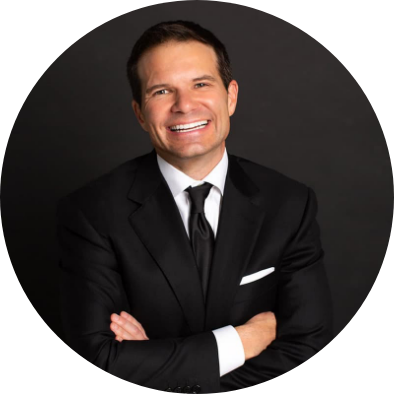
"My goal with every facelift is to restore a more youthful version of you—not change what makes you unique. Every facelift I perform is customized to enhance your natural features and help you feel beautifully refreshed and confident."
- Todd C. Hobgood, MD
If you’re deciding between a mini facelift and a full facelift, the right choice depends on the degree of aging and the areas you’d like to improve. As noted above, a mini facelift is typically best for patients with early signs of aging, such as mild jowling, while a full facelift comprehensively addresses more advanced aging concerns.
During your consultation, Dr. Hobgood will recommend the approach that best aligns with your anatomy and goals. If you want to start exploring which approach may be right for you, we compare the two techniques in a related blog post.
In addition to the facelift techniques described above, Dr. Hobgood performs revision and liquid facelifts when appropriate. Many patients also choose to combine a facelift with a neck lift or deep plane neck lift for enhanced rejuvenation results.


A revision (secondary) facelift makes improvements after a prior facelift procedure. Dr. Hobgood typically performs revision surgery if a patient’s facelift was many years earlier. In some cases, he corrects unsatisfactory results of facelifts performed by other surgeons.
Revision facelift surgery in Scottsdale is usually more complex than primary surgery and requires the expertise of a facial plastic surgery specialist. Patients considering a revision facelift should contact their original surgeon and request copies of their medical operative reports to be fully prepared for their consultation with Dr. Hobgood.
Because revision facelifts require working through scar tissue and previously altered anatomy, Dr. Hobgood’s deep plane specialization, having performed more than 2,000 facelifts, is directly relevant to achieving predictable, natural results in these complex cases.
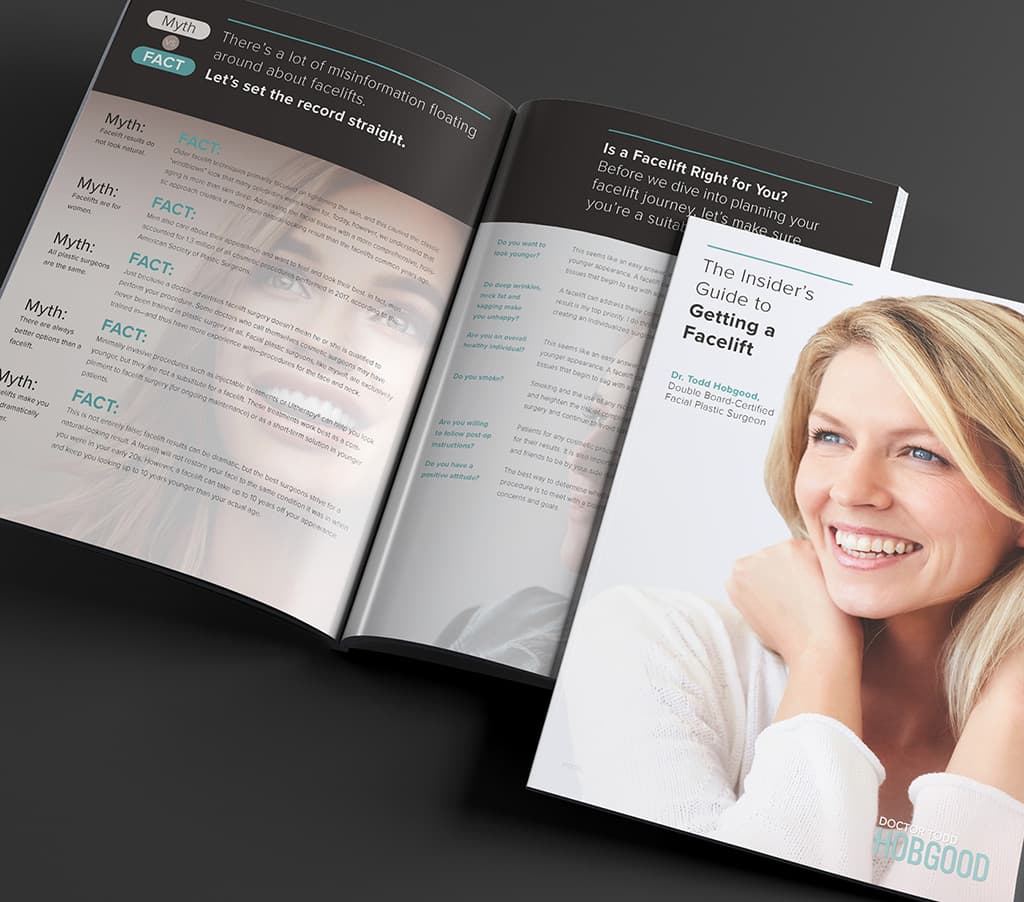
"The Insider's Guide to Getting a Facelift" is the definitive e-book that distinguishes facts from myths and describes the journey of a facelift patient with engaging content and easy-to-understand illustrations.
Double board-certified facial plastic surgeon Dr. Todd Hobgood is one of the leading facelift experts in the U.S., and he's drawn on years of experience to create this Insider's Guide.
Dr. Hobgood's Insider's Guide describes:
Submit the form below to receive our free eGuide as part of a short series of emails on Facelift.
For those who wish to avoid surgery, a liquid facelift utilizes injectables to help your skin and facial contours appear younger and more refreshed. While some patients opt for a liquid facelift for jowls, wrinkles, and other concerns, this approach provides subtle, temporary results. A surgical facelift is the better option for comprehensive, long-lasting rejuvenation.
Nonsurgical facelift options treat wrinkles and volume loss with temporary injectable treatments. BOTOX® Cosmetic or Dysport® relaxes the injected muscles, causing the overlying skin to smooth and preventing some expression-based wrinkles from appearing.
At the same time, dermal fillers restore volume beneath the skin to improve contours and create a more youthful appearance. Biostimulatory fillers, such as Sculptra, can round out this “liquid facelift” by stimulating collagen production for longer-lasting enhancements.
While a facelift is seen as the gold standard for lasting, dramatic facial rejuvenation, many people choose facelift alternatives such as injectable treatments to complement their surgical results.

Facelift surgery is an outpatient procedure that takes approximately 3 to 4 hours.
Patients are often nervous about the visibility of facelift scars. Dr. Hobgood carefully places each incision to ensure it’s as discreet as possible:
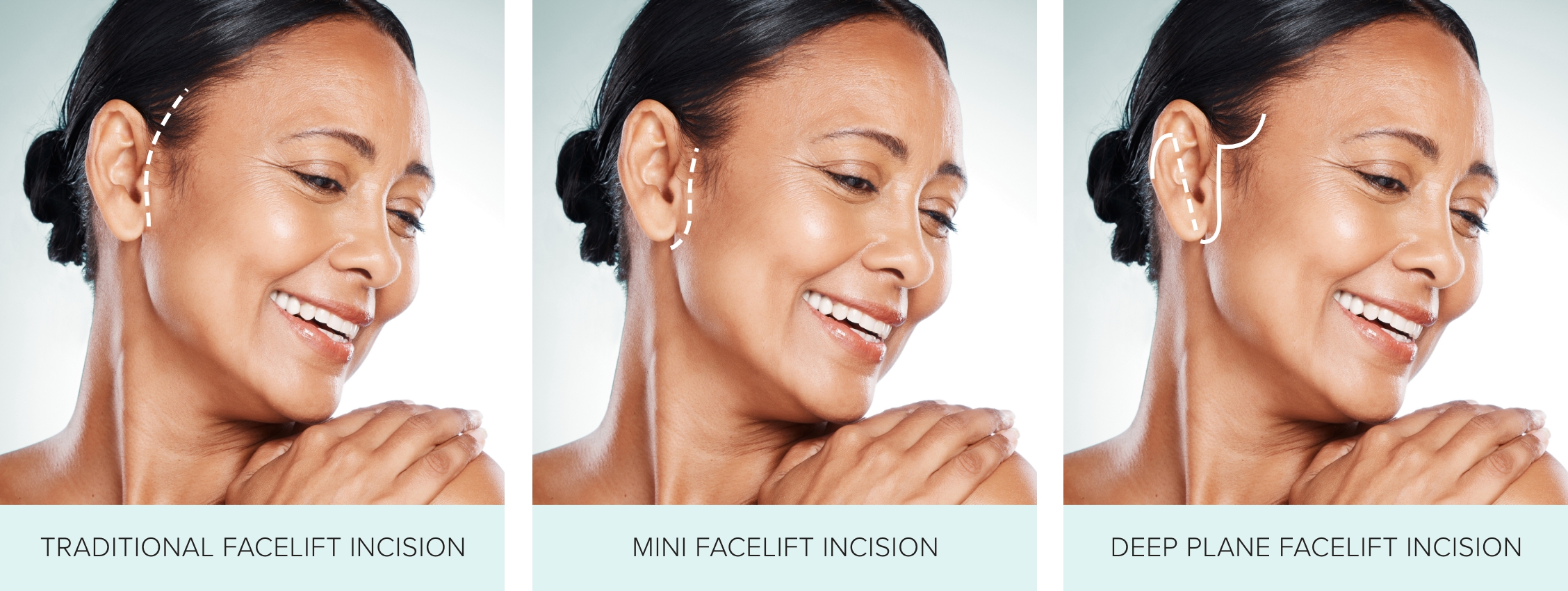
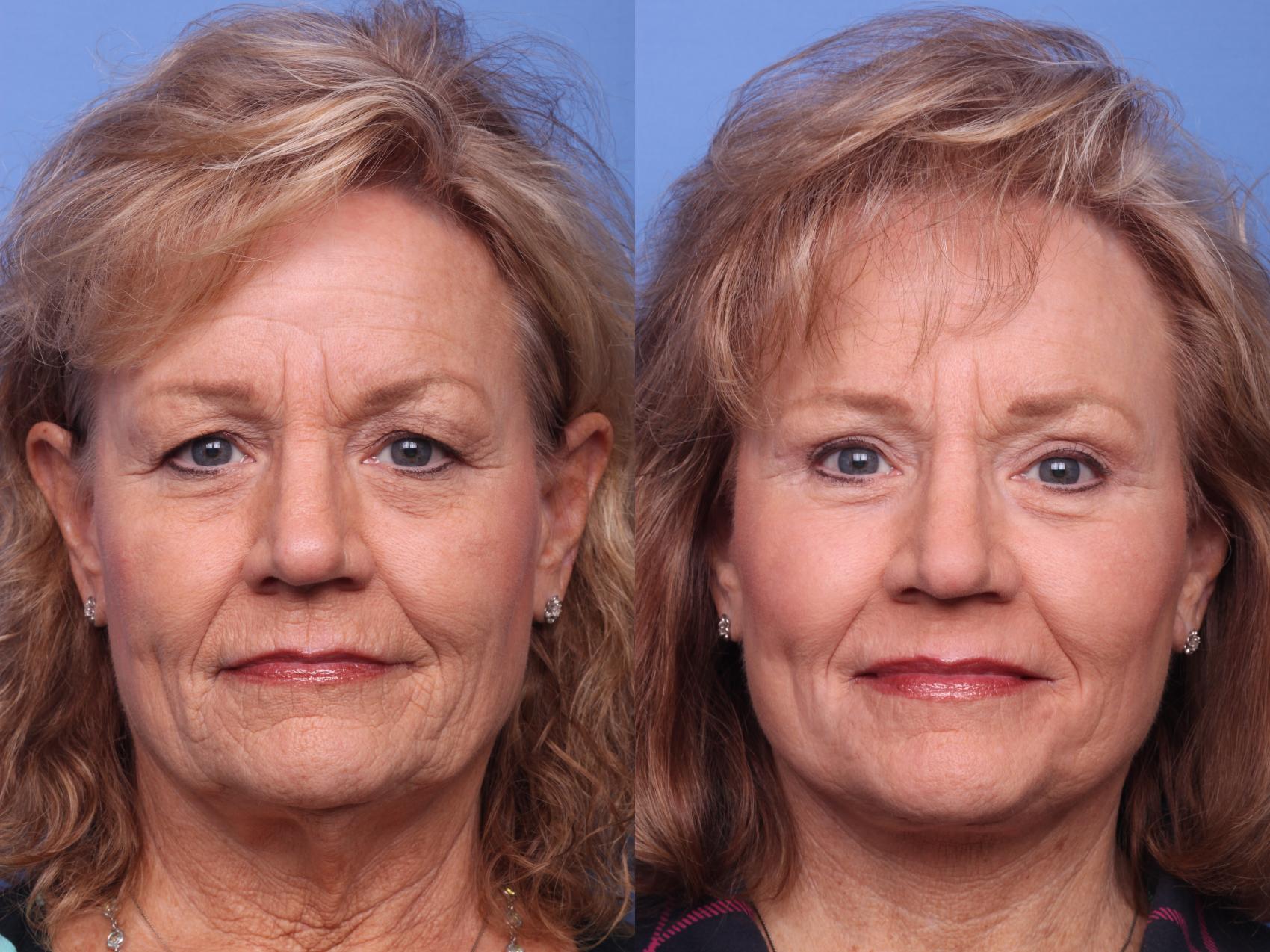
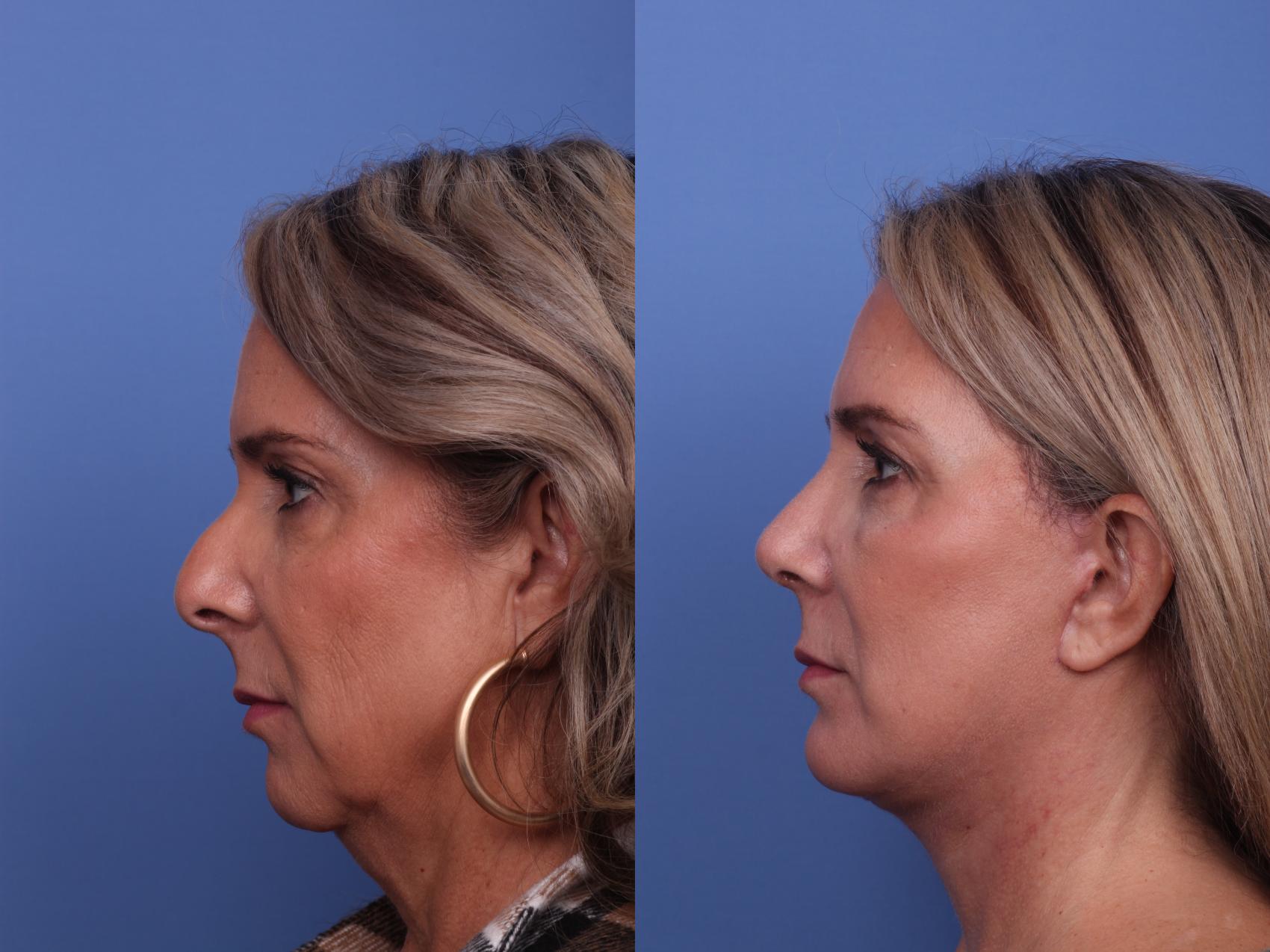
A facelift looks natural when it restores youthful contours while preserving your unique facial expressions and movement. Dr. Hobgood ensures that your face maintains its full range of muscular movement so you will still have your unique appearance. Too many changes during a facelift can produce results that don’t look natural. Dr. Hobgood is a skilled surgeon and will give you a rested, youthful appearance. His before-and-after photo gallery of more than 125 facelift patients and 380+ 5-star Google reviews are evidence of his exceptional results.
Your primary focus during facelift recovery should be patience. While every patient’s recovery is unique, the healing timeline typically follows a similar trajectory:
“Dr. Hobgood and his team were great. I felt very comfortable with Dr. Hobgood given his great reputation in the industry. His friendly approach makes you feel almost like a part of his family. thanks for everything.”
– wildmusicsjl facelift patient on RealSelf.com
When performed by an experienced facial plastic surgeon, a facelift offers both physical and emotional benefits.
Dr. Hobgood’s patients enjoy:
Commonly combined procedures with a facelift include treatments that address the upper face, improve skin quality, and enhance overall facial balance. Patients often enjoy the best results when their facelift goes beyond “standard.” Dr. Hobgood offers a personalized facelift treatment plan that targets multiple areas of concern for comprehensive results.
Typical pairings include:
Please see our related blog post on the average age for facelift surgery to learn more.
This is very subjective, as it depends on your age at the time of surgery, the degree of aging your face displays, and other factors. However, according to a study published by the American Society of Plastic Surgeons, facelift patients rated themselves as looking 12 years younger after a facelift procedure.
A SMAS facelift tightens the superficial muscular layer of the face to improve sagging, while a deep plane facelift goes deeper to reposition underlying tissues and restore facial volume more naturally. Because the deep plane technique releases and lifts deeper structures, it often provides more comprehensive and longer-lasting results, particularly in the midface and neck. The best approach depends on your anatomy and goals, which Dr. Hobgood evaluates during your consultation.
In many cases, the most natural, youthful results come from a combined surgical and nonsurgical approach, such as Dr. Hobgood’s signature One Touch Restore facelift.
Dr. Hobgood encourages patients to look beyond branding and focus on the fundamentals: choosing a surgeon who understands facial anatomy, uses proven techniques, and tailors every procedure to the individual. His approach prioritizes deep plane and SMAS-based facelifts, which deliver the most natural-looking and lasting results for qualified patients.
Get to know Dr. Hobgood—often considered the best facelift surgeon in Scottsdale—and your options for facial rejuvenation. Request a consultation online using our simple form, or call the office at (480) 214-9955 to set up your appointment.
Request My Consultation
Reviewed for clinical accuracy by Dr. Todd C. Hobgood on May 6th, 2026.